Blog

  • Living in Agony

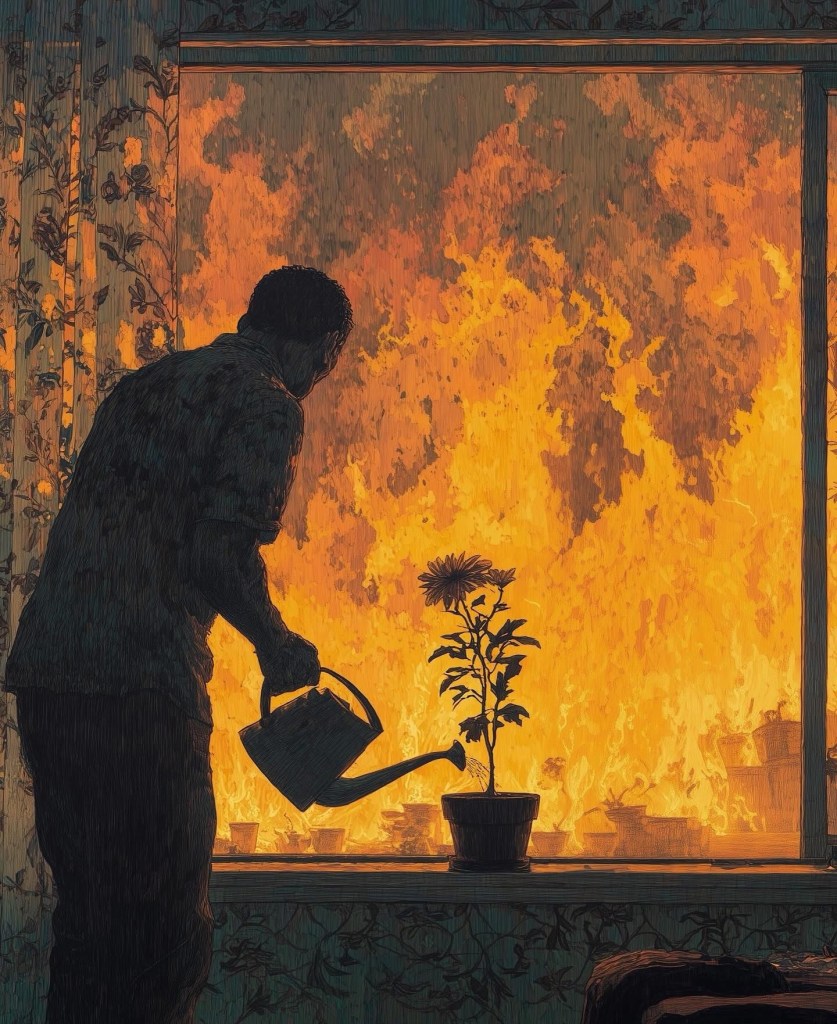
    I am living in my agony,

    not visiting it,

    not passing through on the way to something better—

    I’ve unpacked here.

    Learned the hours.

    Memorized the sound of my own breathing

    when the night stretches too wide.

    Pain isn’t dramatic anymore.

    It doesn’t shout.

    It hums.

    Low and constant,

    like a refrigerator in the dark—

    easy to ignore until the power goes out

    and you realize how loud it always was.

    I wake up already tired,

    already negotiating with myself

    about how much truth I can afford today.

    Some days I give nothing.

    Some days I bleed quietly into routine

    and call it productivity.

    I carry my agony politely.

    I hold doors.

    I smile.

    I ask other people how they’re doing

    and mean it—

    because focusing on their lives

    keeps me from inventorying my own wreckage.

    But it’s there.

    In the pauses.

    In the way I flinch at kindness

    like it might ask something of me later.

    In how I brace myself

    even when nothing is coming.

    Living in my agony means

    learning the weight of unshed tears,

    how they press behind the eyes,

    how they settle in the chest

    like a language I never learned to speak aloud.

    It means knowing that healing isn’t linear—

    it’s circular.

    You come back to the same wounds

    wearing different names,

    hoping this time they recognize you

    as someone who survived.

    I don’t romanticize this.

    There is nothing beautiful about endurance

    when it costs you pieces you can’t replace.

    There is nothing noble

    about being strong so long

    you forget what rest feels like.

    And still—

    I keep going.

    Not because I’m brave.

    Not because I believe everything will work out.

    But because something stubborn in me

    refuses to let the pain have the last word.

    Living in my agony

    doesn’t mean I’ve given up.

    It means I’m honest about where I am.

    It means I’m still here,

    even when here hurts,

    even when the only victory

    is making it to the end of the day

    without disappearing.

    This is not a cry for saving.

    It’s a statement of fact.

    A line drawn in the dirt

    that says:

    this is where I stand,

    this is what I carry,

    and despite it all—

    I am still breathing.

  • What Have I Become

    What have I become, my sweetest friend,

    when even your silence sounds like judgment?

    When you look at me

    like I’m something you remember

    but don’t recognize anymore.

    I’m made of aftermath now

    of things that didn’t kill me

    but stayed anyway.

    I learned how to survive by shrinking,

    by numbing the sharp edges

    until nothing cut

    and nothing healed.

    I speak in half-truths.

    I smile like it’s a habit I can’t break.

    I carry my worst thoughts

    like contraband

    hidden, heavy, always with me.

    I wasn’t born this hollow.

    I was worn down.

    Sandpapered by time,

    by love that took more than it gave,

    by nights that taught me

    how easy it is to disappear

    without going anywhere.

    If you’re still calling me friend,

    don’t ask me to be better.

    Don’t ask me to go back.

    That person didn’t survive this.

    This is what’s left

    quieter, darker,

    harder to love,

    still breathing

    like that’s supposed to mean something.

  • The Last Inning

    When we were kids,

    the world was small enough

    to fit in a backyard

    and big enough

    to hold every dream we had.

    You were Jose Canseco,

    power in your swing,

    confidence loud and fearless.

    I was Pudge Rodriguez,

    steady behind the plate,

    trusting you to bring it home.

    Same dirt on our shoes.

    Same sunburned afternoons.

    Same belief that if we played long enough,

    nothing would ever change.

    We didn’t talk about the future.

    We just assumed it would include each other—

    like cousins always do,

    like best friends always promise

    without saying the words.

    Somewhere along the way,

    the seasons stopped lining up.

    Different paths.

    Different lives.

    Different versions of who we had to become

    just to survive.

    Now years sit between us

    like unopened letters.

    No fights.

    No big goodbye.

    Just silence that grew

    while we weren’t looking.

    I still think of you

    when memories get soft—

    when laughter used to come easy,

    when belonging didn’t feel complicated.

    I still remember us

    before adulthood taught us

    how to drift.

    You don’t know me anymore.

    Maybe you don’t even think of me.

    But I still carry that kid

    who stood at the plate

    trusting his cousin

    to be there.

    And even now,

    part of me hopes

    that somewhere inside you,

    you remember us too—

    not as strangers,

    not as silence,

    but as two kids

    on the same team,

    believing we were unstoppable.

  • Misunderstood Strength

    Strength, we thought,

    was not leaving.

    It was holding the line

    while it cut us.

    It was loyalty without limits.

    It was silence

    that looked like grace.

    Now we know

    strength sometimes sounds like no,

    sometimes looks like distance,

    sometimes feels like grief

    for who we used to be.

  • “You’re Really Gonna Cry, Brittney?”

    Photo Credit: Louis Galvez

    You didn’t raise your voice.

    You didn’t have to.

    You just smiled

    and rearranged the truth

    until I started apologizing

    for things you did.

    You said I was sensitive.

    Dramatic.

    Confused.

    You said my memory had holes,

    that my feelings were exaggerations,

    that my pain was inconvenient.

    And slowly—

    I believed you.

    I started second-guessing

    my own reactions,

    replaying conversations

    like crime scenes,

    looking for proof

    that I was the problem.

    You taught me how to mistrust myself.

    How to ask permission

    for my own emotions.

    How to swallow hurt

    and call it maturity.

    When I cried,

    you called it manipulation.

    When I asked questions,

    you called it paranoia.

    When I needed reassurance,

    you called it neediness.

    You were always so calm.

    So reasonable.

    So sure.

    And I was always unraveling,

    wondering how I could feel so wrong

    while you felt so right.

    You erased things gently—

    a sentence here,

    a moment there—

    until my reality felt slippery,

    like trying to hold water

    with shaking hands.

    I started keeping quiet.

    Not because I had nothing to say,

    but because I didn’t trust

    what I knew anymore.

    And that’s the cruelest part:

    you didn’t just hurt me—

    you made me doubt

    my ability to know

    when I was being hurt.

    But here’s what you didn’t count on.

    Memory comes back

    when distance does.

    Clarity returns

    when the noise leaves.

    And truth—

    truth is patient.

    I remember now.

    I remember how my body reacted

    before my mind caught up.

    I remember the way my chest tightened

    every time you said,

    “That never happened.”

    I wasn’t crazy.

    I was responding to lies

    wrapped in softness.

    I wasn’t broken.

    I was being bent.

    And now,

    I choose myself again.

    I trust the voice

    you tried to quiet.

    I believe the version of me

    who knew something was wrong

    even when she couldn’t explain it yet.

    You don’t get to rewrite me anymore.

    I know what I lived.

    I know what I felt.

    And I no longer need your permission

    to call it what it was.

  • After the Fact

    Nothing teaches you faster

    than the sentence

    I wouldn’t do that again.

    It doesn’t mean you’re wiser now—

    just more aware

    of the cost.

    Awareness isn’t loud.

    It doesn’t brag.

    It just changes how you choose

    when no one is watching.

  • Experience, Misnamed

    What made us think we were wise—

    was it the way we survived

    without stopping to ask

    what it was costing us?

    We confused endurance with understanding,

    mistook scars for proof,

    called repetition experience

    and believed pain automatically meant growth.

    We spoke with certainty

    before we learned how little we knew.

    Loved like permanence was guaranteed.

    Spent time like it couldn’t betray us.

    We thought being strong meant staying,

    that knowing better would come later,

    that consequences were lessons

    meant for someone else.

    But wisdom didn’t arrive in confidence—

    it came quietly,

    through loss,

    through regret,

    through the ache of realizing

    we would choose differently now.

    Maybe we weren’t wise.

    Maybe we were just brave enough

    to keep going

    without instructions.

  • Getting Clean

    The hardest part of getting clean

    isn’t the cravings.

    It’s the apologies.

    The ones you owe

    to people who loved you

    while you were slowly vanishing.

    The ones you owe

    to past versions of yourself

    you barely recognize anymore.

    It’s learning how to say

    “I’m sorry”

    and not expect relief in return.

    Learning how to say

    “I’m trying”

    when trust still feels fragile

    and unfinished.

    Some apologies are met with grace.

    Some are met with silence.

    Some come back years later

    in quiet moments

    when you finally understand

    the weight of what was broken.

    Getting clean means standing there—

    in the middle of what you ruined—

    with nothing to hide behind.

    Knowing regret can’t undo damage,

    it can only mean you see it now.

    And maybe the bravest apology

    isn’t words at all,

    but staying.

    Doing better.

    Letting time believe you

    before anyone else does.

  • The Weight With No Name

    It’s the shade that arrives without footsteps,

    the presence you feel before you even know it’s there.

    It slips beneath the skin,

    quiet as breath,

    cold as a truth you’ve been avoiding.

    It doesn’t shout.

    It doesn’t rush.

    It settles —

    patient, deliberate —

    like it’s claiming territory it always believed was its own.

    It blurs the edges of everything you thought you understood,

    turning familiar rooms into hollow shapes,

    turning your own thoughts into echoes

    you can’t quite trace back to their source.

    It’s the weight that bends your spine

    even when you’re standing still,

    the chill that lingers in your chest

    long after you try to shake it out.

    It doesn’t threaten.

    It doesn’t need to.

    Its power is in the quiet —

    in the way it convinces you

    that nothing outside it is real,

    that the world beyond its reach

    is fading,

    unreliable,

    distant.

    And you believe it,

    because you’ve been here before.

    Because its voice sounds

    dangerously similar

    to your own.

  • If Honesty Looks Like Madness 

    You don’t like my point of view,

    you think that I’m insane—

    because I see cracks in the surface

    you’re determined to call normal.

    I question what you’ve learned to accept.

    I feel too deeply,

    say the quiet parts out loud,

    refuse to numb myself

    just to fit the frame.

    If honesty sounds like madness,

    if sensitivity feels like a threat,

    then maybe sanity was never meant

    to be comfortable.

    I’m not broken—

    I’m just standing where the truth is louder,

    where pretending takes more energy

    than being real.

    And if that makes me hard to understand,

    so be it.

    I’d rather be misunderstood

    than mute myself into something

    that finally makes sense to you

    but costs me everything.