Tag: life

  • Depression Is Like Drowning

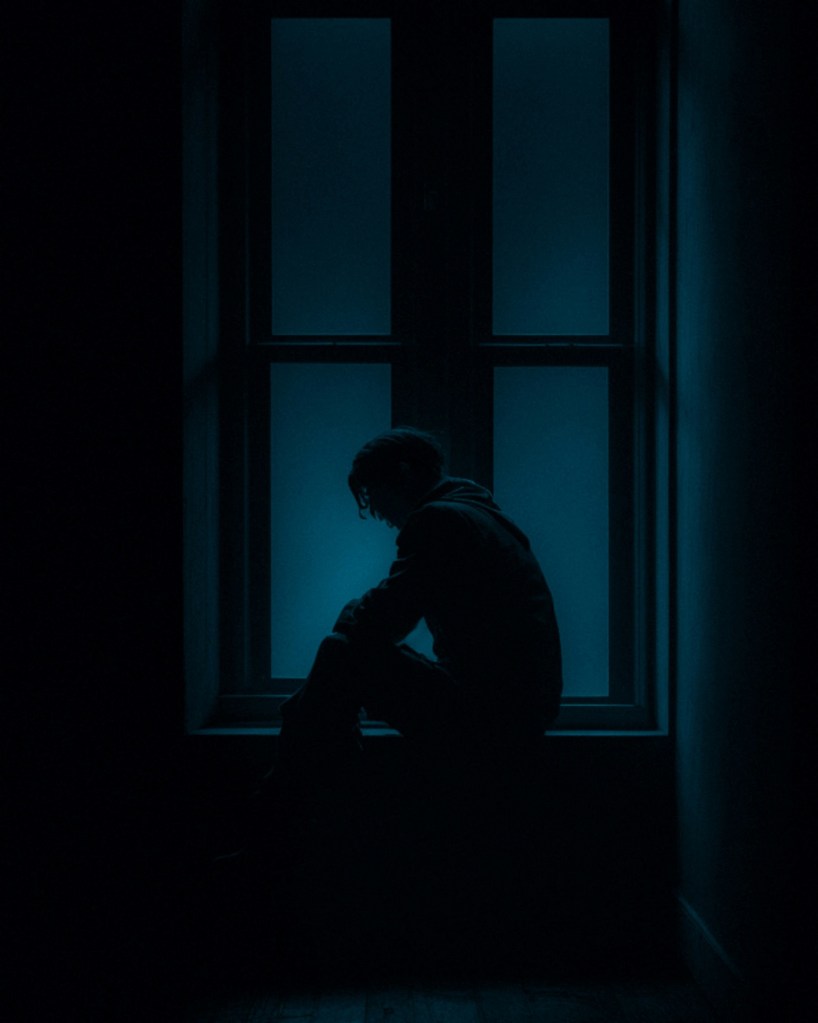
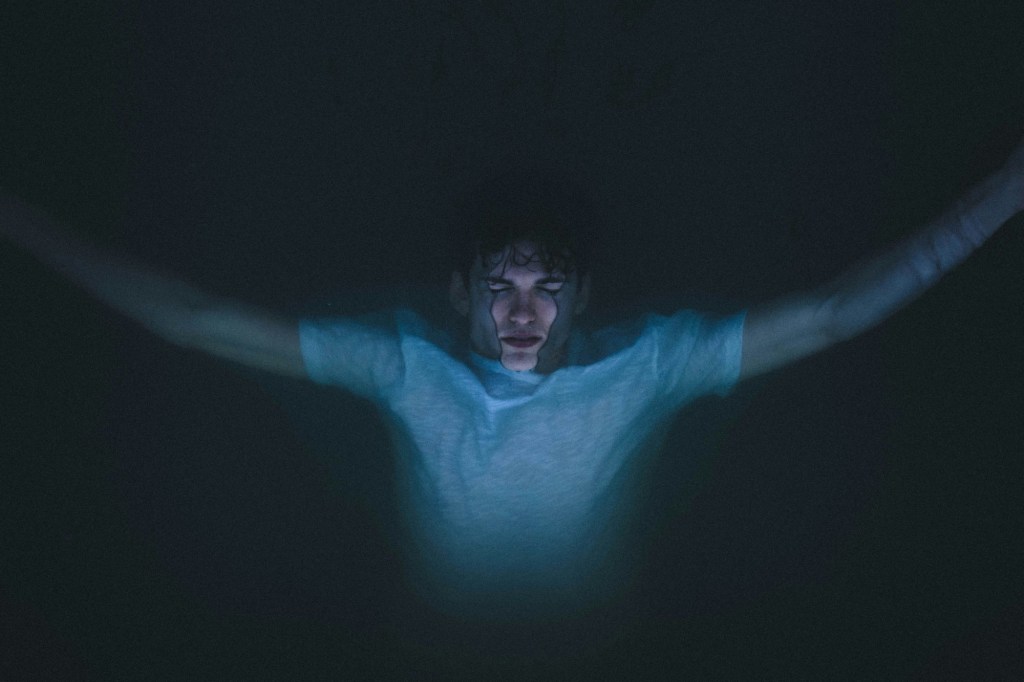
    Depression is like drowning, except you can still breathe. My chest rises and falls, my lungs fill with air, but inside everything feels heavy, waterlogged, sinking. People see me standing, walking, talking. They see me smile. They think I’m fine because I’m not flailing, not gasping for air. They don’t realize drowning doesn’t always look like chaos—it can be quiet. It can be invisible.

    It’s not the violent splashing kind, the kind that makes people rush to the rescue. It’s the silent slipping under, inch by inch. Every day, my head sinks a little lower beneath the surface, and the world grows muffled. Sounds dull. Colors fade. Even my own thoughts feel blurred, like they’re trapped underwater with me.

    I want to scream, but the sound dies before it leaves my throat. I want to reach out, but my arms are too heavy. And so I smile, nod, laugh when I’m supposed to. I carry on. Because if I let the mask slip, if I let people see the water rising around me, I’m not sure they’d understand. I’m not sure they’d believe me.

    What no one tells you about drowning is how exhausting it is. Every second is survival—treading water, pretending it’s effortless, hiding the fatigue. My arms ache. My chest burns. My mind whispers that it would be easier to stop fighting, to just let myself sink. And the truth is, sometimes that thought feels like relief.

    That’s the cruelty of it. Depression doesn’t take away my breath—it lets me breathe, but makes the air feel useless. It doesn’t stop my heart—it just strips the meaning out of every beat. I’m alive, but it doesn’t feel like living. It feels like waiting. Waiting for someone to notice. Waiting for the current to change. Waiting for the day when I either finally reach the shore or stop fighting altogether.

    And some nights, I can feel it—my body getting heavier, the pull of the water stronger, my will to fight fading. I don’t just think about sinking anymore. I start to wonder what it would feel like to stop treading, to let the silence take me under completely.

    That’s the darkest truth of drowning in depression: you don’t always go under screaming. Sometimes you just… go under.
  • Just Give Me Peace

    I don’t ask for happiness anymore. Happiness feels like a myth, a story people tell themselves so they can keep moving. I don’t ask for love, either — love is fragile, it breaks too easily, and I am too sharp, too heavy, too much for it to survive in my hands.

    All I want is peace.

    Not the kind people romanticize, with sunsets and calm oceans. I mean silence. Stillness. An end to the noise inside my head that never shuts off. The relentless thoughts that claw and whisper, the memories that bleed through the cracks, the storms that rise without warning and tear me apart from the inside out.

    I don’t need light. I don’t need joy. I don’t even need tomorrow.

    Just give me peace.

    Because I am tired. Tired of carrying the weight of a body that refuses to rest. Tired of dragging myself through days that feel more like punishment than life. Tired of holding on when I don’t even know what I’m holding on for.

    I imagine peace as a release. A surrender. Not victory, not defeat — just quiet. No more questions. No more wounds reopening. No more storms.

    And maybe that’s the cruelest part: the world tells me peace is found by fighting harder, healing more, pushing through. But what if peace doesn’t come from effort at all? What if peace is only possible when there is nothing left to fight?

    All I know is this: I don’t crave anything except the absence of this endless war inside me.

    Just give me peace.

  • What is Wrong With Me?

    What is wrong with me? Why am I addicted to this miserable feeling?

    I don’t even know when the line blurred, when pain stopped being something to run from and started becoming something I crave. It’s like I’ve carved out a home inside of misery, built walls around it, and now I don’t know how to live without it. And in the back of my mind, the question gnaws at me: is it just the mental illness?

    People think addiction is about chasing pleasure, chasing a high, chasing escape. But for me, it’s about clinging to what’s familiar. Misery is predictable. Pain is reliable. Happiness feels like a stranger I can’t trust—it slips away as quickly as it comes. Misery stays. And maybe that’s the illness too—this twisted need to settle for what hurts, to feel safest inside the suffering.

    Sometimes I wonder if my brain was wired wrong from the start. If the illness isn’t just something I have, but something I am. Is that why I drink? Is that why I hold tight to the wreckage instead of crawling out? Maybe it isn’t weakness. Maybe it’s just the illness feeding itself, keeping me trapped.

    Because the truth is, it’s not just the bottle I’m addicted to—it’s the aftermath. The heaviness, the regret, the cycle of self-destruction. I hate it, yet I chase it. Again and again, like it’s the only thing that belongs to me. And every time, I hear the echo: this is the illness, this is the illness.

    So what is wrong with me? Maybe nothing. Maybe it’s all just the way the illness wraps itself around my soul, convincing me that misery is home. Or maybe everything. Maybe I’ve become so tangled in the darkness that even when the door is open, I can’t step out.

    And the cruelest truth? A part of me doesn’t even want to.

  • Dear Mom

    Dear Mom,

    It was never your fault.

    Not the silence.

    Not the weight I carried alone.

    Not the way I learned to disappear inside myself.

    You did what you could with the tools you had.

    You held storms in your chest

    so they would not spill onto me.

    You taught me strength,

    even if it came wrapped in quiet.

    I used to wonder why you couldn’t save me

    from every shadow.

    Now I see you were fighting your own,

    and still, somehow,

    you gave me light where you could.

    Dear Mom,

    I don’t blame you.

    I don’t carry anger anymore.

    I carry understanding.

    I carry forgiveness.

    I carry you.

    It was never your fault.

    It never will be.

    Love,

    The child who finally knows

    you did the best you could.

  • What Does It All Mean?

    I ask it in the silence,

    in the dark hours when the world feels too heavy,

    too sharp,

    too empty.

    What does it all mean?

    The tears, the laughter,

    the fleeting joys,

    the losses that carve holes so deep

    you wonder if you’ll ever fill them again.

    Is there a reason for the war inside me?

    For the nights I drowned my own voice?

    For the moments I almost gave up,

    but didn’t?

    Maybe meaning isn’t a grand design

    etched in stone above us.

    Maybe it’s found in smaller things —

    the hand that steadies you,

    the breath you didn’t think you’d take,

    the sunrise that still arrives

    even when you don’t feel ready for it.

    What does it all mean?

    I don’t know.

    But maybe it means this:

    that even in the fog,

    we keep moving,

    we keep searching,

    we keep choosing to stay.

    And maybe the meaning is not something we find,

    but something we become.

  • The Weight of Belonging

    I don’t know how to live in this world.

    It moves too fast,

    asks for masks I don’t know how to wear,

    demands a kind of certainty

    I’ve never been able to hold.

    I watch people move through it

    like dancers who know the steps,

    while I stumble at the edges,

    always a beat behind,

    always out of rhythm.

    The rules confuse me.

    The noise overwhelms me.

    And sometimes I wonder

    if I was meant for another place,

    another time,

    a gentler existence where my heart

    would not feel so out of place.

    But I am here.

    And even in the not-knowing,

    I am learning small things:

    how to breathe when the weight presses down,

    how to stand still when the ground shakes,

    how to let softness survive in a world

    that worships hardness.

    Maybe I will never know how to live in this world

    the way others do.

    Maybe my way will always look different,

    slower, quieter, stranger.

    But maybe that is its own kind of life.

    Maybe not knowing is still living.

    Maybe it is enough to stay,

    to search,

    to keep reaching for light

    in a world that feels too dark.

  • The Quiet Survival

    No one ever talks about the quiet survival.

    The kind where you wake up,

    not because you want to,

    but because your body betrays you

    with another breath.

    No one speaks of the war it takes

    just to stand,

    to sit,

    to pretend you are alive

    when inside you are unraveling thread by thread.

    There are no parades

    for the nights you do not end,

    for the days you drag yourself through the motions,

    your smile cracked porcelain,

    your voice rehearsed.

    The world only praises the dramatic victories,

    the visible resurrections.

    But no one claps for the silent battle —

    the choice not to pick up the bottle,

    not to open the drawer,

    not to vanish.

    Quiet survival leaves no scars anyone can see.

    It leaves you hollow-eyed,

    aching,

    wondering if endurance is a gift

    or just another kind of punishment.

    Still, it happens.

    Night after night.

    Day after day.

    An uncelebrated persistence.

    And maybe that is what makes it so brutal:

    that the hardest survival

    is the kind no one ever sees.

  • The Darkness

    The darkness is not just the absence of light.

    It is weight.

    It is silence with teeth.

    It is the place where time loses its shape

    and thoughts echo too loudly.

    I have known its language.

    The way it whispers,

    convincing me I am alone,

    convincing me I am unworthy,

    convincing me there is no way forward.

    But the darkness is not only destruction.

    It is also a mirror.

    In its depths, I see the parts of myself

    I tried to bury,

    the shadows I tried to outrun.

    It forces me to face what daylight lets me hide.

    Some nights, it feels endless.

    Other nights, I catch the faintest glow —

    a reminder that even the smallest flame

    can hold its ground

    against all that emptiness.

    The darkness teaches me this:

    it is not here to kill me,

    but to show me how badly I want to live.

  • A Thousand Quiet Fractures

    No one tells you that you could break your own heart.

    I always thought heartbreak would come from someone else—

    a lover walking away, a betrayal, a silence too loud to bear.

    But I learned it was me.

    It was the choices I didn’t make,

    the dreams I abandoned out of fear,

    the way I turned my back on the parts of myself

    that needed care the most.

    I broke my heart every time I settled,

    every time I swallowed my truth

    because I thought it was too heavy for others to carry.

    I broke it when I believed the voices

    that said I wasn’t enough,

    when I convinced myself

    that survival was the same thing as living.

    There was no great explosion, no dramatic ending—

    just small fractures,

    a thousand tiny betrayals of my own making.

    And by the time I looked down,

    I was standing in the wreckage,

    cut on the glass I’d been dropping for years.

    But here’s the part no one tells you either:

    the same hands that break it

    can learn how to hold it,

    to piece it back together,

    to love what’s left.

    And maybe that’s the hardest lesson of all—

    that healing doesn’t come from someone else,

    it begins the moment you stop breaking

    your own heart.

  • Unfamiliar Face

    I wake up in the morning and I look in the mirror to try and find out where I belong.

    Some days I recognize the face staring back; other days it feels like a stranger is living in my skin.

    I trace the lines under my eyes, the curve of my mouth,

    as if the map of my belonging might be written somewhere there.

    But mirrors don’t answer questions.

    They only echo them.

    And the longer I stare, the louder the silence becomes.

    Where do I belong?

    In the history I can’t rewrite?

    In the dreams I’m still too afraid to chase?

    In the body I’m learning to forgive?

    Some mornings I leave the mirror without an answer.

    Other mornings, I carry the question like a stone in my pocket—

    not an answer, but a reminder

    that belonging is less about where you are,

    and more about learning how to stand in your own reflection

    without turning away.