Tag: life

  • Hate is a Strong Word But..

    Photo Credit: Mattia

    I Hate Myself

    Not loudly. Not dramatically. Quietly. Constantly.

    It lives under my skin, humming like an old fluorescent light that never shuts off.

    I hate the way I breathe through days I don’t want.

    I hate how my body moves like a ghost inhabiting something that isn’t mine.

    I hate the weight of existing — the endless cycle of pretending, collapsing, rebuilding, pretending again.

    I’ve tried to love myself, but every time I get close, I pull away.

    Maybe because love feels like a lie when you’ve learned to survive without it.

    Maybe because hating myself feels safer — familiar, predictable.

    I’ve carved apologies into my silence.

    I’ve bled forgiveness that never came.

    And still, the mirror waits — patient, cruel — asking who I am without the pain.

    But I don’t know anymore.

    Maybe there’s nothing left underneath it.

    Maybe I’ve become the echo of every broken promise I ever made to myself.

    And maybe that’s why it’s so quiet now.

    Because even my soul is tired of screaming.

  • Beneath the Surface

    It’s more than just the cut.

    It’s the moment before it —

    when the world feels too heavy to hold

    and your own skin feels like a cage.

    It’s the silence that builds inside your chest,

    the scream you never let out,

    the ache you can’t name

    that demands to be seen somehow.

    People see scars and think they know the story.

    But they don’t see the nights you fought it.

    The times you cried yourself to sleep and woke up still fighting.

    The way you learned to smile so no one would ask questions.

    It’s not about wanting to die —

    it’s about not knowing how to live

    with the weight you carry.

    And maybe one day,

    you’ll look at those scars and see something different.

    Not shame. Not weakness.

    But proof —

    that you survived every version of yourself

    that thought you couldn’t.

    Because it’s more than just the cut.

    It’s the healing that came after,

    the courage it took to stay,

    and the quiet strength of a heart

    that refused to stop beating

    even when it wanted to.

  • Echo of Loneliness

    Photo Credit: Fredrick Löwer

    It surprises me how quickly the shift happens.

    One moment I’m okay — maybe even a little happy — and the next, it’s like the air changes. The light fades. The room feels colder, emptier. The silence gets loud again.

    I can be laughing, talking, even surrounded by people, and still feel that slow pull inward — that sudden drop where everything good starts to feel like a lie. It’s not dramatic; it’s quiet. A quiet collapse inside my chest that no one else can see.

    I’ve tried to understand it. I’ve blamed hormones, exhaustion, trauma, the ghosts of everything I’ve tried to bury. Maybe it’s all of those things. Or maybe it’s just the echo of loneliness that never really leaves — it just waits for the noise to die down so it can crawl back in.

    Depression doesn’t knock. It doesn’t announce itself. It just… arrives.

    It takes your good day and turns it inside out until you’re left wondering if the good part ever happened at all.

    And I hate how convincing it is — how real the emptiness feels when it returns. It tells me that I’m too much and not enough all at once. That everyone I love is just pretending. That I’m better off staying quiet because no one really wants to hear the truth anyway.

    But I’ve lived enough days like this to know it passes. Maybe not quickly, maybe not cleanly, but it does. The good doesn’t disappear — it just gets harder to see through the fog.

    So I breathe.

    I remind myself that feeling alone isn’t the same as being alone.

    That healing doesn’t mean I’ll never fall back into the dark — it just means I know the way out now.

    How can I go from having a good day to feeling so alone?

    Because healing isn’t linear. Because memory is heavy.

    Because sometimes the heart still mourns the things the mind has moved on from.

    And that’s okay.

    The sun still rises, even when I can’t feel its warmth.

  • For My Aunt

    For My Aunt

    I’m so grateful for you.

    You’ve always been a strong pillar in my life — steady when everything else was shifting. You’ve loved me in ways that felt like safety, like understanding, like home.

    You’ve been like a mom to me — guiding me, grounding me, reminding me who I am when I start to forget.

    Thank you for showing up, for listening without judgment, for believing in me when I couldn’t believe in myself.

    I know there were times I was hard to handle as a child. I just didn’t understand the different dynamics with you and how it could feel so much like home.

    Your strength has carried me through more storms than you’ll ever know.

    And I hope you realize that every bit of light I find along the way has a little of yours in it.

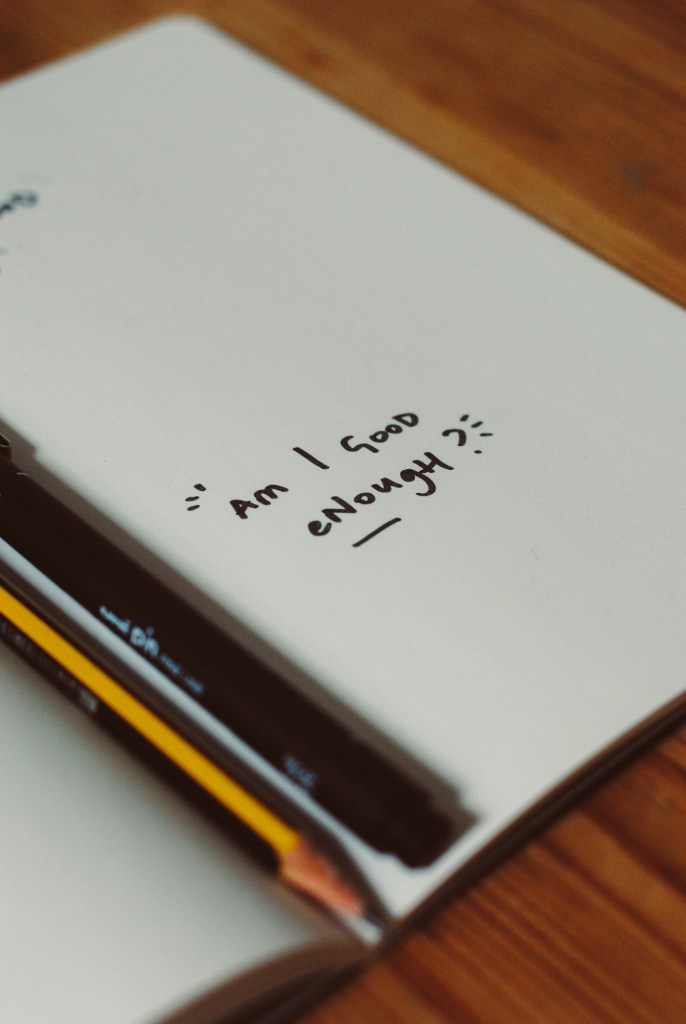
  • You Are Enough

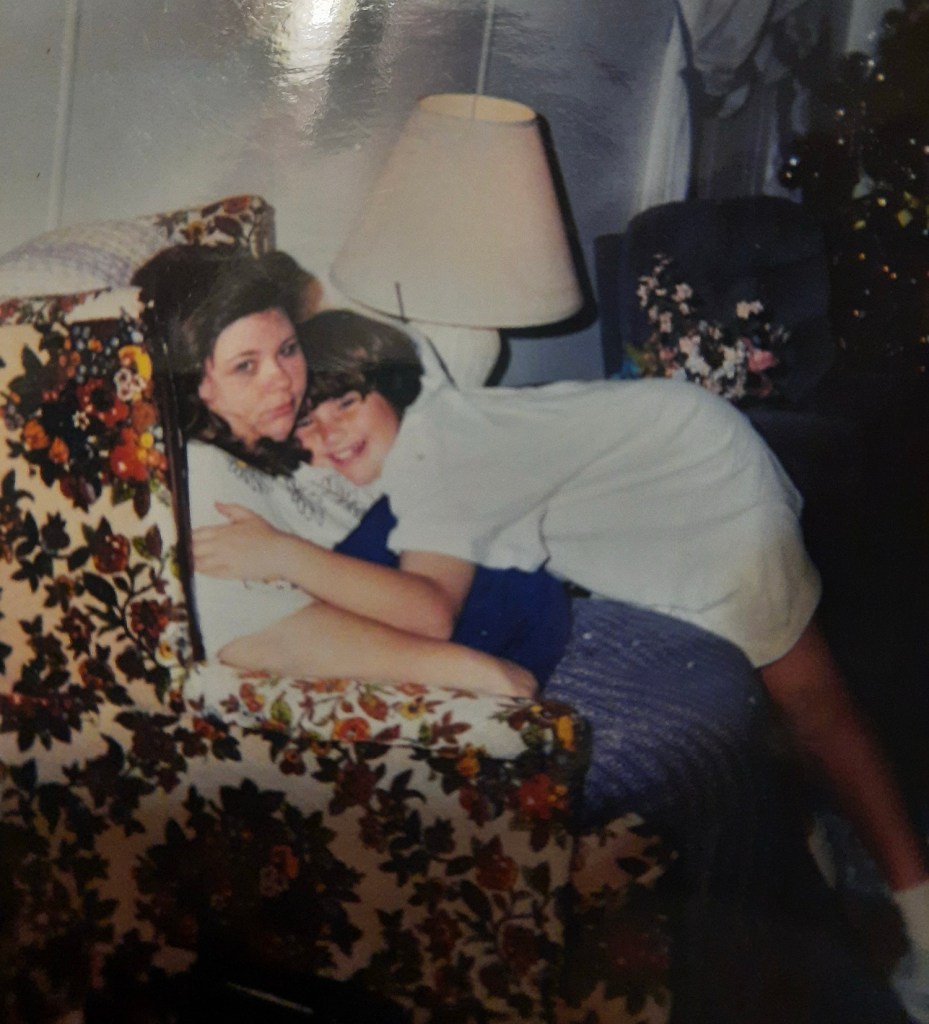
    Sometimes I wish I could go back to when I was a kid.

    Before the world got heavy. Before I learned how to hide my feelings behind forced smiles and polite lies. Before I started measuring my worth by how much I could give, fix, or prove.

    I wish I could find that small version of me — the one who still believed love was simple, that people stayed, that being herself was enough — and tell her, you don’t have to try so hard.

    You don’t have to be perfect.

    You don’t have to make everyone proud.

    You don’t have to carry everyone else’s pain just to feel like you matter.

    Somewhere along the way, I started believing I had to earn love — that I had to perform to deserve it. But I wish someone had told me earlier that being human was enough. That just existing — messy, emotional, imperfect — was okay.

    If I could sit beside that little girl now, I’d brush the hair from her face and whisper,

    You are enough.

    You always were.

    You just forgot for a while.

    And maybe that’s what healing really is — remembering what the world made you forget.
  • Fragile

    Recovery isn’t the clean, steady climb people imagine it to be.

    It’s not a straight line, and it’s not always inspiring.

    Sometimes it’s messy and painful — full of steps backward, relapses of thought, and nights spent questioning whether I’m really getting better or just getting used to the ache.

    I’m fragile in recovery.

    I wake up some days full of hope, and by nightfall, I’m drowning in doubt again. The smallest thing — a memory, a song, a smell — can pull me back into the dark, and I hate how easily I break. But breaking is part of it. Healing doesn’t mean the cracks disappear; it means learning how to live with them.

    People think recovery is about strength, but I’ve learned it’s mostly about endurance — about showing up when your hands are still shaking. About forgiving yourself when you fall apart again, even after promising you wouldn’t.

    There’s no finish line here.

    No moment where I suddenly become whole again.

    There’s just me — fragile, trembling, trying.

    And maybe that’s enough.

    Maybe being fragile in recovery means I’m still fighting,

    still choosing life,

    even when the weight of it threatens to break me.

  • The Weight of Loving The Broken

    You’ll never truly know

    how broken someone is

    until you try to love them—

    until your hands meet the cracks

    they’ve spent years hiding,

    until your kindness echoes

    in rooms where only silence has lived.

    They’ll flinch from gentle words

    as if softness were a threat.

    They’ll test your patience

    like a child lost in a storm,

    unsure if safety can exist without pain.

    And if you stay long enough,

    you’ll learn that love

    isn’t always light.

    Sometimes it’s holding someone

    while their darkness spills out,

    and realizing

    you can’t fix them—

    only love them through the breaking.

  • The Ocean at Dusk

    There’s something about the ocean that feels infinite.

    You can stand there for hours,

    watching the water breathe in and out,

    and still feel like you’ve barely seen it at all.

    When the sun begins to sink,

    the light turns to honey —

    soft, forgiving, alive.

    It touches the waves like a promise,

    and the horizon becomes a line between what is and what could be.

    In that hour, everything slows.

    The noise quiets,

    the thoughts settle.

    Even grief seems to pause long enough to listen.

    The ocean doesn’t demand anything from you.

    It just exists — endless, patient, vast.

    And somehow, that’s enough to remind you that you can, too.

    Watching the sun go down feels like watching hope shift form —

    it doesn’t disappear;

    it just changes colors.

    And when it finally slips beneath the water,

    you realize you’ve been holding your breath the whole time.

    The ocean is breathtaking not because it’s perfect,

    but because it reminds you of everything that still moves,

    still lives,

    still shines,

    even after the day ends.

  • And All I Loved, I Loved Alone

    Photo Credit: Parker Sturdivant

    There’s a strange kind of beauty in loneliness —

    not the cinematic kind where rain falls softly against the window and someone reaches for your hand,

    but the kind that aches in silence,

    where the only heartbeat you hear is your own.

    Maybe that’s always been me.

    The quiet observer. The one who feels everything too deeply and still says nothing.

    I used to think love would fix that —

    that it would fill the hollow space inside me where all the echoes live.

    But love never stayed long enough to understand the language of my silence.

    I’ve loved people, moments, dreams that dissolved before I could hold them.

    I’ve watched laughter fade into distance, and promises into static.

    They said I was guarded, hard to read, maybe even cold.

    But they never saw how fiercely I felt everything —

    how my heart broke in private,

    how I carried every loss like it still had a pulse.

    “And all I loved, I loved alone.”

    Poe said that.

    And maybe he understood what it means to love like that —

    to pour yourself into people who never notice the depth of it,

    to find beauty in the ache of solitude.

    Because love, when you’ve been hurt enough, becomes something quieter.

    It’s not fireworks — it’s endurance.

    It’s learning to sit in the dark and still care.

    To keep loving even when no one stays.

    To keep believing that maybe, just maybe, that’s enough.

    Sometimes, I think being alone doesn’t mean you’re unloved.

    It just means you’re the one who loves hardest —

    in silence,

    in absence,

    in the fog.

  • Stuck

    You’re not stuck because you can’t, you’re stuck because you won’t.

    That line won’t stop echoing in my head. It’s brutal — because it’s true.

    I’ve spent so long blaming the world, the pain, the past, the people who broke me. But the truth is, I’ve built my own walls and then called them safety. I’ve chosen the comfort of misery over the risk of change. It’s easier to sit in the ruin I know than to walk toward something uncertain.

    There’s a twisted kind of peace in staying stuck — it asks nothing of me except surrender. No effort, no failure, just the quiet hum of stagnation disguised as survival.

    But I know better. I’m not trapped — I’m avoiding. Avoiding the climb, the fall, the chance that something might actually work out. Because what if it doesn’t? What if I get free and still feel empty?

    Maybe that’s the scariest part — realizing I could move, but choosing not to.