Author: Emery Lane Grey

  • Getting Clean

    The hardest part of getting clean

    isn’t the cravings.

    It’s the apologies.

    The ones you owe

    to people who loved you

    while you were slowly vanishing.

    The ones you owe

    to past versions of yourself

    you barely recognize anymore.

    It’s learning how to say

    “I’m sorry”

    and not expect relief in return.

    Learning how to say

    “I’m trying”

    when trust still feels fragile

    and unfinished.

    Some apologies are met with grace.

    Some are met with silence.

    Some come back years later

    in quiet moments

    when you finally understand

    the weight of what was broken.

    Getting clean means standing there—

    in the middle of what you ruined—

    with nothing to hide behind.

    Knowing regret can’t undo damage,

    it can only mean you see it now.

    And maybe the bravest apology

    isn’t words at all,

    but staying.

    Doing better.

    Letting time believe you

    before anyone else does.

  • The Weight With No Name

    It’s the shade that arrives without footsteps,

    the presence you feel before you even know it’s there.

    It slips beneath the skin,

    quiet as breath,

    cold as a truth you’ve been avoiding.

    It doesn’t shout.

    It doesn’t rush.

    It settles —

    patient, deliberate —

    like it’s claiming territory it always believed was its own.

    It blurs the edges of everything you thought you understood,

    turning familiar rooms into hollow shapes,

    turning your own thoughts into echoes

    you can’t quite trace back to their source.

    It’s the weight that bends your spine

    even when you’re standing still,

    the chill that lingers in your chest

    long after you try to shake it out.

    It doesn’t threaten.

    It doesn’t need to.

    Its power is in the quiet —

    in the way it convinces you

    that nothing outside it is real,

    that the world beyond its reach

    is fading,

    unreliable,

    distant.

    And you believe it,

    because you’ve been here before.

    Because its voice sounds

    dangerously similar

    to your own.

  • If Honesty Looks Like Madness 

    You don’t like my point of view,

    you think that I’m insane—

    because I see cracks in the surface

    you’re determined to call normal.

    I question what you’ve learned to accept.

    I feel too deeply,

    say the quiet parts out loud,

    refuse to numb myself

    just to fit the frame.

    If honesty sounds like madness,

    if sensitivity feels like a threat,

    then maybe sanity was never meant

    to be comfortable.

    I’m not broken—

    I’m just standing where the truth is louder,

    where pretending takes more energy

    than being real.

    And if that makes me hard to understand,

    so be it.

    I’d rather be misunderstood

    than mute myself into something

    that finally makes sense to you

    but costs me everything.

  • Meeting Myself

    I met both the happiest

    and saddest versions of myself last year—

    sometimes in the same breath,

    sometimes in the same night.

    I met the one who laughed freely,

    who believed again without checking the cost,

    who felt light enough

    to imagine a future

    that didn’t scare her.

    And I met the one

    who sat on the floor too long,

    who questioned her worth in silence,

    who carried grief

    like it was part of her anatomy.

    They didn’t recognize each other at first.

    One wanted to stay.

    One wanted to disappear.

    Both were tired of pretending

    they didn’t exist.

    Last year taught me

    that joy and sorrow

    aren’t opposites—

    they’re neighbors.

    They borrow from each other,

    shape each other,

    prove we’re alive in different languages.

    I survived by learning this:

    I don’t have to choose one version

    to be real.

    I can hold them both,

    thank them both,

    and keep moving.

    Because meeting myself—

    all of me—

    was the hardest

    and most honest thing

    I’ve ever done.

  • The Ocean, Palm Trees, and Regrets

    The ocean keeps breathing

    like nothing has ever been broken.

    Waves arrive, waves leave,

    each one pretending it isn’t carrying

    someone else’s grief back out to sea.

    I watch them anyway,

    hoping they’ll take something from me

    without asking what it costs.

    Palm trees sway overhead,

    carefree and rooted,

    as if they’ve never questioned

    where they belong.

    They don’t ache for other lives.

    They don’t replay moments

    they should’ve handled differently.

    They just exist—

    and I envy them for that.

    The air is warm,

    salt clinging to my skin,

    sunlight making everything look

    forgiven.

    From a distance,

    this place looks like healing.

    Like peace.

    Like the kind of postcard

    people think fixes you.

    But regrets travel well.

    They pack light.

    They follow you barefoot through sand,

    show up uninvited

    between sips of something cold,

    whispering names

    the ocean can’t drown out.

    I think about the words

    I didn’t say soon enough,

    the moments I let slip

    because I was afraid

    of what choosing would cost me.

    I think about how easy it is

    to mistake beauty for closure,

    movement for growth.

    The ocean keeps rolling in,

    unbothered by my spirals.

    The palm trees keep dancing,

    unaware of the weight

    I’m carrying under calm skin.

    And I stand here—

    sun-soaked, smiling for strangers,

    learning that sometimes regret

    doesn’t mean you chose wrong.

    Sometimes it just means

    you cared deeply,

    and the tide hadn’t turned yet.

  • I’ve been waiting all night

    Not pacing.

    Not counting the hours.

    Just staying awake

    in that quiet way

    where hope doesn’t make noise.

    Waiting like you wait for a light to turn on

    in a room you know by heart.

    Waiting because some part of me believed

    you’d come back to this moment,

    to this breath,

    to me saying it out loud.

    I’ve been waiting all night—

    not because I had nothing else,

    but because this mattered.

  • The Devil Wears a Suit and Tie

    The devil wears a suit and tie—

    pressed clean,

    smiling easy,

    knows exactly how to sound reasonable.

    He doesn’t knock things over.

    He rearranges them.

    Calls temptation opportunity,

    calls control love,

    calls silence peace

    while he’s draining the room of air.

    He shakes hands,

    looks you in the eye,

    tells you everything you want to hear

    right before he takes

    everything you didn’t know

    you were giving away.

    The devil doesn’t scream.

    He persuades.

    He waits until you’re tired,

    until you’re lonely enough

    to mistake charm for safety

    and confidence for truth.

    He wears a suit and tie

    because evil learned

    it doesn’t need horns

    when it has credibility.

    It doesn’t need fire

    when it has patience.

    And by the time you notice the cost,

    you’re already wondering

    how you ever thought

    he was on your side.

  • Oh, Misunderstood 

    The common things—

    oh, how misunderstood.

    Quiet kindness mistaken for smallness,

    routine for emptiness,

    stability for lack of fire.

    We overlook the ordinary

    until it’s gone—

    the steady hand,

    the familiar voice,

    the moments that didn’t ask to be noticed

    but held everything together anyway.

    It’s always the simple things

    that carry the most weight,

    and somehow

    the least applause.

  • When the Magnolias Bloom

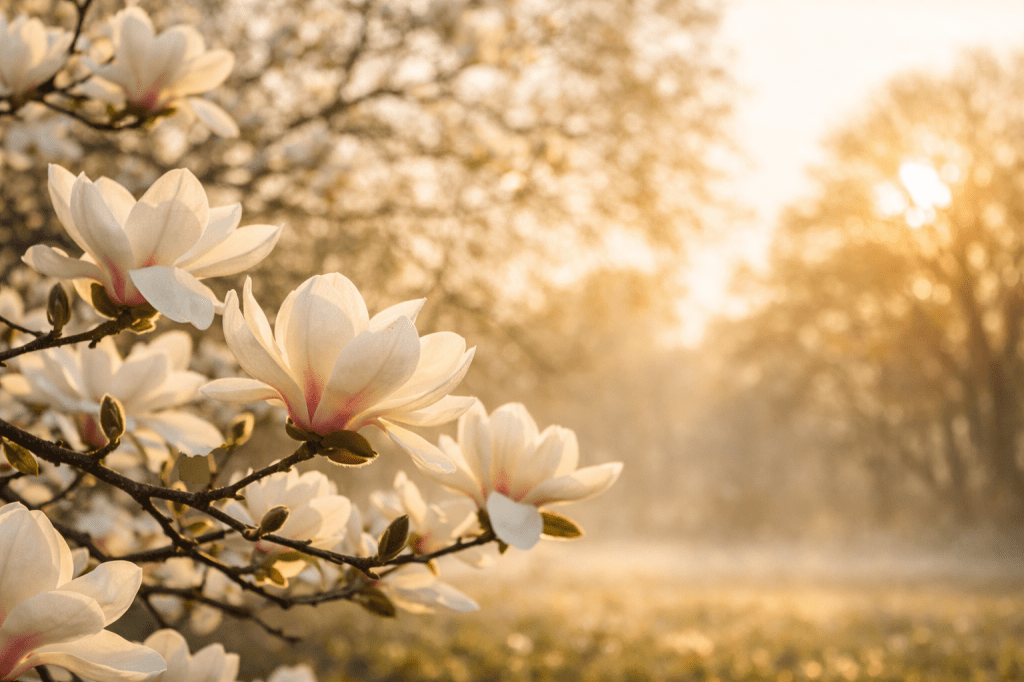
    When the magnolias bloom,

    the world remembers how to soften.

    White petals open like quiet forgiveness,

    thick with scent and patience,

    unhurried by whatever we rushed through.

    They bloom after the cold

    as if it never owned them,

    as if survival didn’t leave marks.

    No announcement.

    No apology.

    Just beauty insisting on itself.

    I think about timing then—

    how some things wait until they’re ready,

    how some hearts don’t open

    until the frost finally loosens its grip.

    How blooming late

    doesn’t mean blooming wrong.

    When the magnolias bloom,

    I let myself believe in return.

    In second chances that don’t explain themselves.

    In tenderness strong enough

    to come back every year

    without asking who stayed to see it.

    And for a moment,

    everything feels possible again—

    not because life is easy,

    but because something beautiful

    chose to open anyway.

  • Self Destruction

    I don’t destroy myself loudly.

    There are no explosions,

    no dramatic exits.

    Just a slow erosion—

    choice by choice,

    silence by silence.

    I wear it like a habit.

    Like something familiar

    I reach for when I don’t know

    what else to do with my hands.

    Old patterns feel safer

    than unfamiliar hope.

    I sabotage gently.

    Miss the calls that might save me.

    Stay where I know I’ll be hurt

    because at least it’s predictable.

    Pain I recognize

    feels easier than healing

    I don’t trust.

    I tell myself I’m in control.

    That I could stop anytime.

    That this isn’t destruction,

    it’s coping.

    But the mirror keeps count

    of what I’m losing

    even when I refuse to.

    Some days it looks like recklessness.

    Other days it looks like discipline—

    like denying myself rest,

    joy, softness,

    as if I haven’t earned them yet.

    That’s the trick of it.

    Self-destruction doesn’t always beg.

    Sometimes it convinces you

    you deserve the damage.

    I don’t hate myself—

    that’s the lie people expect.

    I just don’t know

    how to be gentle

    without feeling exposed.

    So I choose what hurts

    before something else can.

    And still, somewhere under the ruin,

    there’s a part of me

    that notices the harm,

    that flinches,

    that wants out.

    That part is quiet.

    But it’s not gone.